Wine is memory in liquid form: a scent that captures a moment, a sip that preserves emotions, a vintage that carries the stories of its time. The wine year 2025 can be summed up in one word: change. Not loud, not intrusive, but clearly perceptible in every glass. It was a year full of small movements, major trends and quiet upheavals. A year that showed us how vibrant, bold and surprising the wine world is today. And how much it tells us about ourselves: about what we seek, value, and want to preserve.
One year of wine.vino.wein – and the desire to tell wine differently
When the first issue of wine.vino.wein was published in December 2024, we knew one thing above all: we wanted to tell wine as it really is - as living culture, as community, as pleasure, as adventure. Since then, we've spent a year covering topics that matter: sustainable viticulture, new generations in the cellar, bold stylistics, alcohol-free alternatives, wine culture in transition, wine in art, wine in times of crisis, wine between tradition and new beginnings.We've spoken with winemakers, questioned trends, collected stories - and accompanied a community that loves wine. Now, one year later, we look back: What shaped the wine world in 2025? Which developments have left traces in the glass? And what remains?
This is our review of a year full of inspiration – captured in a single glass.
1. Sustainability becomes the standard
What used to be labelled as "organic," "biodynamic" or "sustainability" and was considered a niche has now become mainstream and everyday practice in viticulture. More and more wineries are adopting regenerative methods to ensure their soils, vines and ecosystems remain healthy and resilient in the future. Cover-cropped vine rows, closed water cycles and minimal interventions are no longer a marketing topic, but an attitude.According to market analyses, the market for organic wine continues to grow: the global organic wine market is expected to grow at around 10% per year from 2025 to 2030. Packaging, resource conservation and transparency are also becoming more important and are no longer just an addition on the label, but decisive for purchasing decisions.
This shift is also noticeable for wine fans: when buying wine today, how a wine was made matters more - what values are behind it, what consciousness is at work in the vineyard and in the cellar. In short: the attitude of a wine is becoming just as important as its taste. A wine that has been honestly produced simply tastes better because it tells a story that continues.
This shift is also noticeable for wine fans: when buying wine today, how a wine was made matters more - what values are behind it, what consciousness is at work in the vineyard and in the cellar. In short: the attitude of a wine is becoming just as important as its taste. A wine that has been honestly produced simply tastes better because it tells a story that continues.

Flashback in the wine.vino.wein cosmos
We too have explored this development intensively in previous issues: In "Where vines grow differently" (Issue 03 Boundless Wine World), we showed you how new wine-growing regions are experimenting with sustainable concepts. In the WeinChat with Derrick Neleman (Issue 04 Wine Wakes Up), the Dutch winemaker spoke about his vision of radically sustainable viticulture - and in "Love of wine - but differently" (Issue 11 No Labels. Just Wine.), we explored mindful engagement with wine as an attitude, not a trend.2. Technology and innovation in the vineyard
2025 has shown: viticulture is no longer a romantic retreat from everyday life - but a field of smart technology. Drones, satellite imagery, artificial intelligence - what sounded like science fiction a few years ago is now part of everyday life for many winemakers. It demonstrated how digital viticulture has become: sensors measure the ripeness of grapes, apps help with water management and plant health, and data models predict harvest times with astonishing precision.
At the same time, we're noticing how grape varieties are changing because the climate is getting louder: warmer summers, earlier ripening, new challenges. For tasting, this means: some wines present themselves fresher, clearer and more balanced - the vineyard is working smarter. The romantic view of craftsmanship remains, but it's joined by smart technology. Tradition and innovation go hand in hand - in the best sense of the phrase.
At the same time, we're noticing how grape varieties are changing because the climate is getting louder: warmer summers, earlier ripening, new challenges. For tasting, this means: some wines present themselves fresher, clearer and more balanced - the vineyard is working smarter. The romantic view of craftsmanship remains, but it's joined by smart technology. Tradition and innovation go hand in hand - in the best sense of the phrase.

Flashback in the wine.vino.wein cosmos
We already discussed this exciting balancing act between tradition and the future in our article "Wine and the World in Transition" (Issue 03/2025: Boundless Wine World) - about winemakers who forge new paths with courage and technology without forgetting their roots. Also in our WeinChat Prof. Dr. Claudia Kammann (Issue 03/2025: Boundless Wine World) spoke about the role of new technologies in viticulture and how they help adapt vines to a changing climate.3. The consumer in transition - less mass, more class
Consumer behaviour is changing. In 2025, many wine lovers drank less, but more consciously - and they're willing to spend more on something special. The search for quality, individuality and origin is replacing the old ""much for little"". So-called ""volume wines"" in the lower price segment are losing market share, while premium qualities remain stable or grow. The focus is shifting to smaller quantities, special bottles and new experiences.The trend towards low-alcohol or alcohol-free wines is also gaining further momentum - health and lifestyle-conscious is the motto. Many producers have made enormous progress here, with results that surprise: complex, elegant and astonishingly close to the original. Pleasure, yes - but with attitude and moderation.
In practice, this means: more exciting options for us connoisseurs, less ordinary fare.

Flashback in the wine.vino.wein cosmos
This new consciousness runs like a common thread through our magazine year: In issue 02/2025 "Conscious Start to 2025" the articles "Mindful Wine Enjoyment" and "Wine Trends 2025" focused on conscious pleasure instead of constant consumption. And in "Pleasure Without Proof?" we examined the rise of alcohol-free alternatives - a topic that definitively found its place on wine shelves in 2025.4. White, light, playful
The world experienced a light white wine moment in 2025. Fresh, clear and generally lighter styles are in demand - wines that don't weigh you down, but accompany you. Whether mineral Rieslings, elegant Chardonnays or Mediterranean Albariños: the diversity in the glass has never been greater. In a world where flexibility matters when it comes to the glass - with food, as an aperitif or for more casual moments - less is often more.
The trend among red wines also moved towards finesse rather than power. Less oak, more fruit, more drinkability - in short: more fun. Lightness is the new luxury feeling.
The trend among red wines also moved towards finesse rather than power. Less oak, more fruit, more drinkability - in short: more fun. Lightness is the new luxury feeling.
Flashback in the wine.vino.wein cosmos
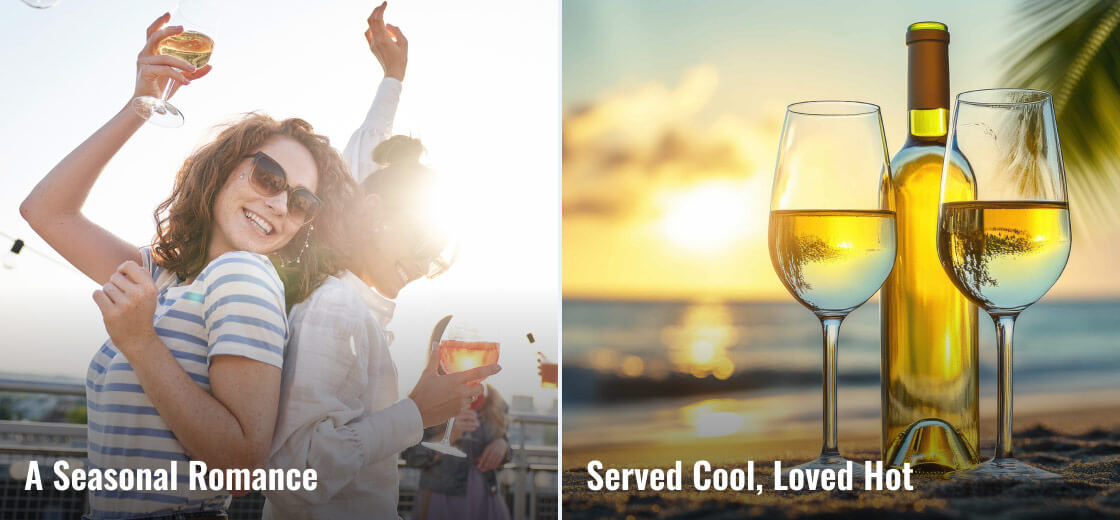
We already sensed this trend in our summer issue 06/2025 "Vino, Vibes and Vitamin D": In "A Seasonal Romance" and "Served Cool, Loved Hot", everything revolved around fresh, light wines that don't just accompany summer, but embody it.5. Climate stress and yield declines
Behind the beautiful stories and balmy summer evenings, a serious alarm bell was also ringing: many regions struggled with weather extremes in 2025 - drought, extreme heat, late frost, earlier ripening. Many regions had to improvise, experiment, sometimes even go without. Yields declined in some places, yet quality remained surprisingly high - thanks to experience, courage and technical precision.
What this means for us: potentially tighter prices, less choice in some vintages, and a stronger emphasis on quality over quantity. For your glass, this means: every vintage tells its own climate story. Active decision-making pays off - those who taste carefully will recognize it in the glass.
Flashback in the wine.vino.wein cosmos
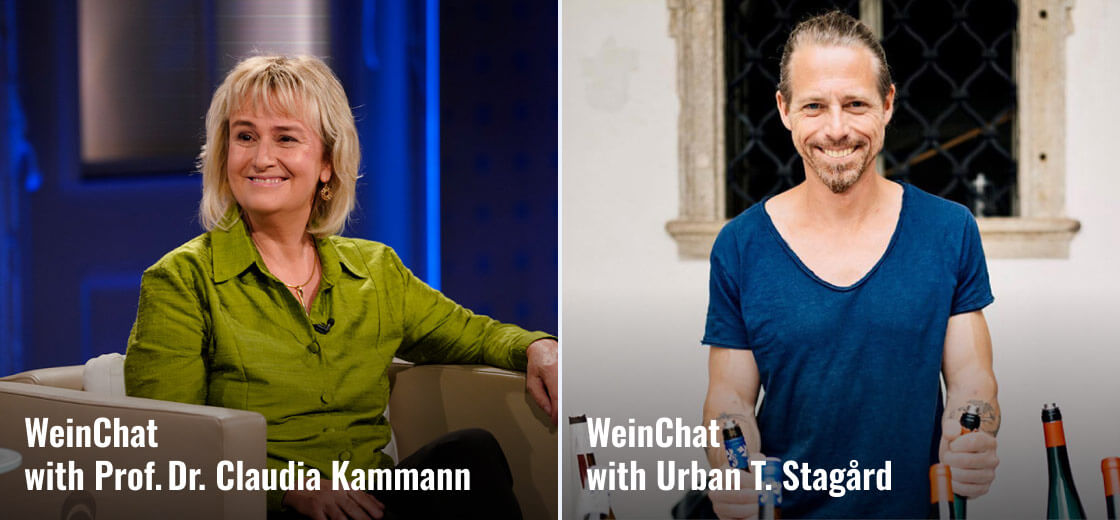
Prof. Dr. Claudia Kammann already explained to us in spring in the WeinChat (Issue 04/2025: Wine awakens) how winemakers are dealing with increasing climate stress - with scientifically sound strategies, innovative management forms and new respect for natural processes in the vineyard.And Urban T. Stagård also spoke openly in our WeinChat (Issue 10/2025: When the grapes ripen) about these challenges - and about how much sensitivity is needed today to maintain a clear style in the tension between climate and character.
6. Wine online - digital, direct, accessible
The wine year 2025 was also one of encounter - just in a different way. Online tastings, virtual wine journeys, social media formats and direct sales have further shortened the distance between winemaker and connoisseur. The exchange has become more personal, more spontaneous and more diverse.
For many, this means: more choice, more proximity, more stories directly from the source. Wine has become more digital - but without losing its magic. On the contrary: the community is growing, and the glass connects even across screens.
Flashback in the wine.vino.wein cosmos
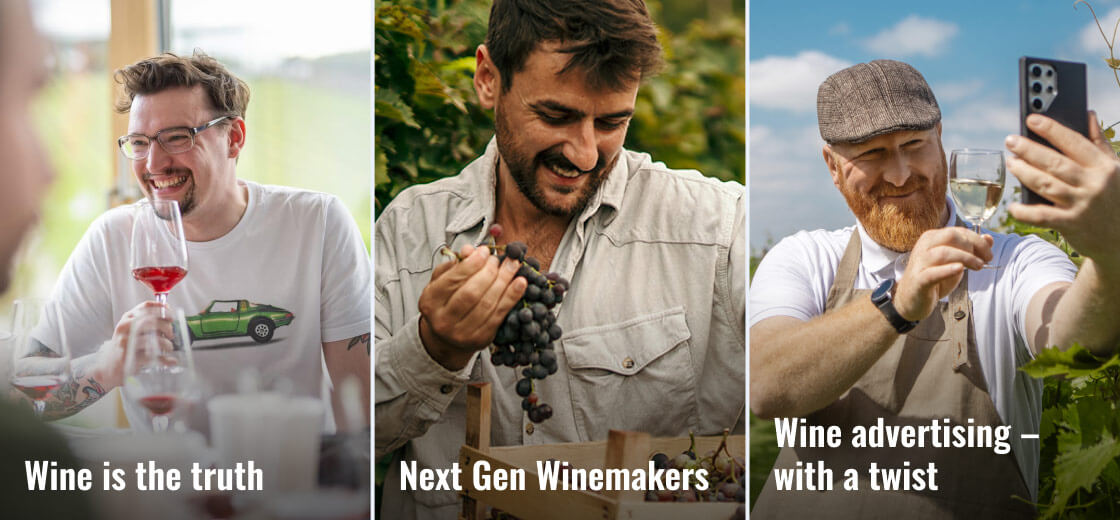
We've also followed this development in our magazines: In Milton Sidney Curtis's columns throughout 2025, the focus was repeatedly on new forms of wine experience that combine authenticity, attitude and creativity – for example in his Text "Wine is the truth" from the issue 03/ 2025: Boundless Wine World.In the article "Next Gen Winemakers" in our issue from April 2025 (04/2025: Wine awakens), we portrayed the emergence of a new generation of winemakers - digital, creative, bold. And in "Wine advertising – with a twist", (issue 11/2025: No labels. Just wine.) we examined how social media, storytelling and authenticity are redefining communication around wine.
A year of subtle notes
2025 was not a year of great revolutions, but one of quiet changes. The focus is clearly on quality, sustainability, experience, lightness and technology - all of this has made the wine world more refined, more reflective and more exciting.Those who drink wine today decide more consciously. The glass is not filled automatically, but deliberately selected. Not only by taste, but also by attitude. And that's perhaps the most beautiful development of the year: that wine doesn't just remain pleasure, but also conversation - about origin, values and the desire to try something new.
Cheers to a year in the glass - and to what's yet to come.
Seite bewerten
Welcome to wine.vino.wein – the wine lover’s magazine
In our magazine you will find editorial articles and information about wine. As we are committed to the responsible use of alcoholic beverages, the content is aimed exclusively at adults and you must be at least 18 years old to visit wine.vino.wein.