The magic of storage
A good wine improves with age. If it’s allowed to! Because often, just a few degrees, a little light, or slightly too dry air can be the difference between a mature Grand Cru with collector’s value and a spoiled disappointment. Anyone who wants to enjoy wine – and, above all, invest in it – should therefore not only know what goes into the glass, but also how to store wines properly so their value can increase.
Why storage is crucial when investing in wine
Wine is not a bank account. Its value cannot simply be managed; it develops over years under specific conditions. For example: a bottle of Château Lafite Rothschild 1982 sold for around €250 about 30 years ago. Today, it fetches well over €3,000 at auction – provided it was stored correctly.
Even the smallest mistakes in temperature, humidity, or light exposure can drastically reduce a wine’s value and even result in complete devaluation for investors. The British trading platform Liv-ex, which manages fine wine indices, emphasizes that without documented, professional storage, nothing works in the investment sector.
Even the smallest mistakes in temperature, humidity, or light exposure can drastically reduce a wine’s value and even result in complete devaluation for investors. The British trading platform Liv-ex, which manages fine wine indices, emphasizes that without documented, professional storage, nothing works in the investment sector.

What your wine needs
Constant temperatureThe ideal storage temperature is between 10 and 14 °C. More important than the exact number is consistency: temperature fluctuations throw wines off balance and can lead to ageing defects.
High, but not tropical, humidity
Around 70 % relative humidity is optimal. If the air is too dry, corks shrink, air penetrates, and the wine oxidises. If it’s too humid, labels can become mouldy, reducing the collector’s value.
No light, no vibrations
Wine prefers darkness. UV light accelerates oxidation, and vibrations – such as those from household appliances – can disrupt long-term development and ageing. If you don’t have a quiet cellar, a wine storage cabinet or professional storage facility is a good alternative.
Storage position and rest
Wine bottles should be stored lying down (exception: screw caps) to keep the cork moist. And: wine needs time. Constantly opening the bottle risks disrupting the maturing process.
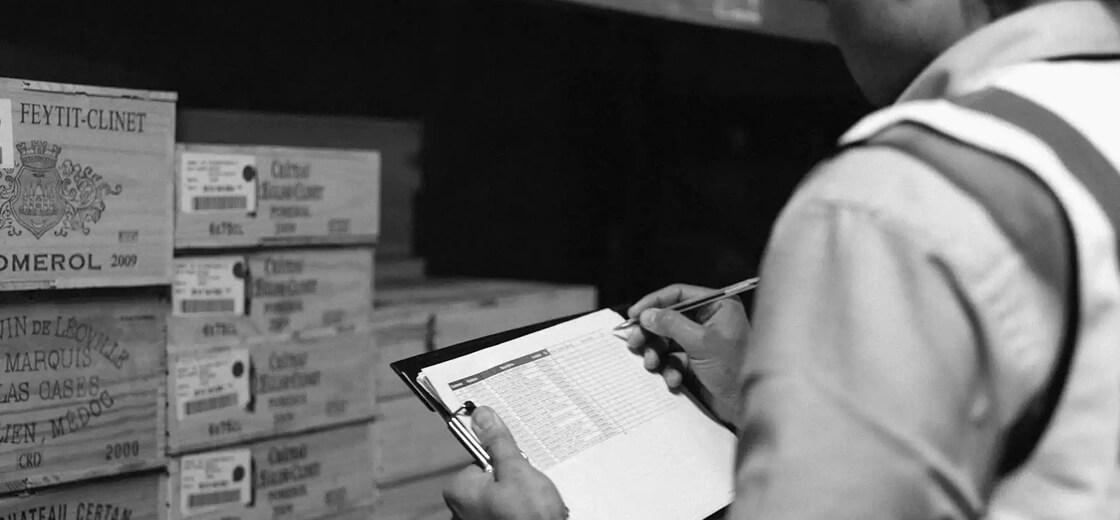
Professional storage: when things get serious
If you want to invest seriously in wine, professional storage facilities are indispensable. Locations such as Octavian Vaults in England or specialised depots in Bordeaux, Zurich, or Hamburg not only offer ideal conditions, but also provide official proof of origin, condition, and storage history – the ‘wine tracking’ of the future.According to Liv-ex, wines with a documented storage history fetch, on average, 30 % higher prices than comparable bottles without proof.
Rules for wine storage
- Dark, quiet room – no daylight, no vibrations
- Temperature: 10–1 °C, as constant as possible
- Humidity: 65–75 %
- Store bottles horizontally
- No strong odours nearby (mould, paint, heating oil)
- Ideal: wine storage cabinet or small wine cellar
The emotional factor
And then there are those wines you may not store for potential returns, but simply because you love them. They deserve at least the same attention. Every bottle is a promaise for the future, and those treated well may be rewarded not only with enjoyment, but also with a surprise in value.The silent art of refinement
Whether you collect because you believe in wine or because you want a reliable investment: without proper storage, it remains liquid luxury – but without any return.The magic of storage lies not only in preservation, but in patient refinement. With the right location, the necessary peace and quiet, and a little expertise, every bottle can reach its full potential – in taste, history, and financial value.
Seite bewerten
Welcome to wine.vino.wein – the wine lover’s magazine
In our magazine you will find editorial articles and information about wine. As we are committed to the responsible use of alcoholic beverages, the content is aimed exclusively at adults and you must be at least 18 years old to visit wine.vino.wein.